Iran VPN Usage Surges 3,758% After Internet Blackout (Jan 2026)
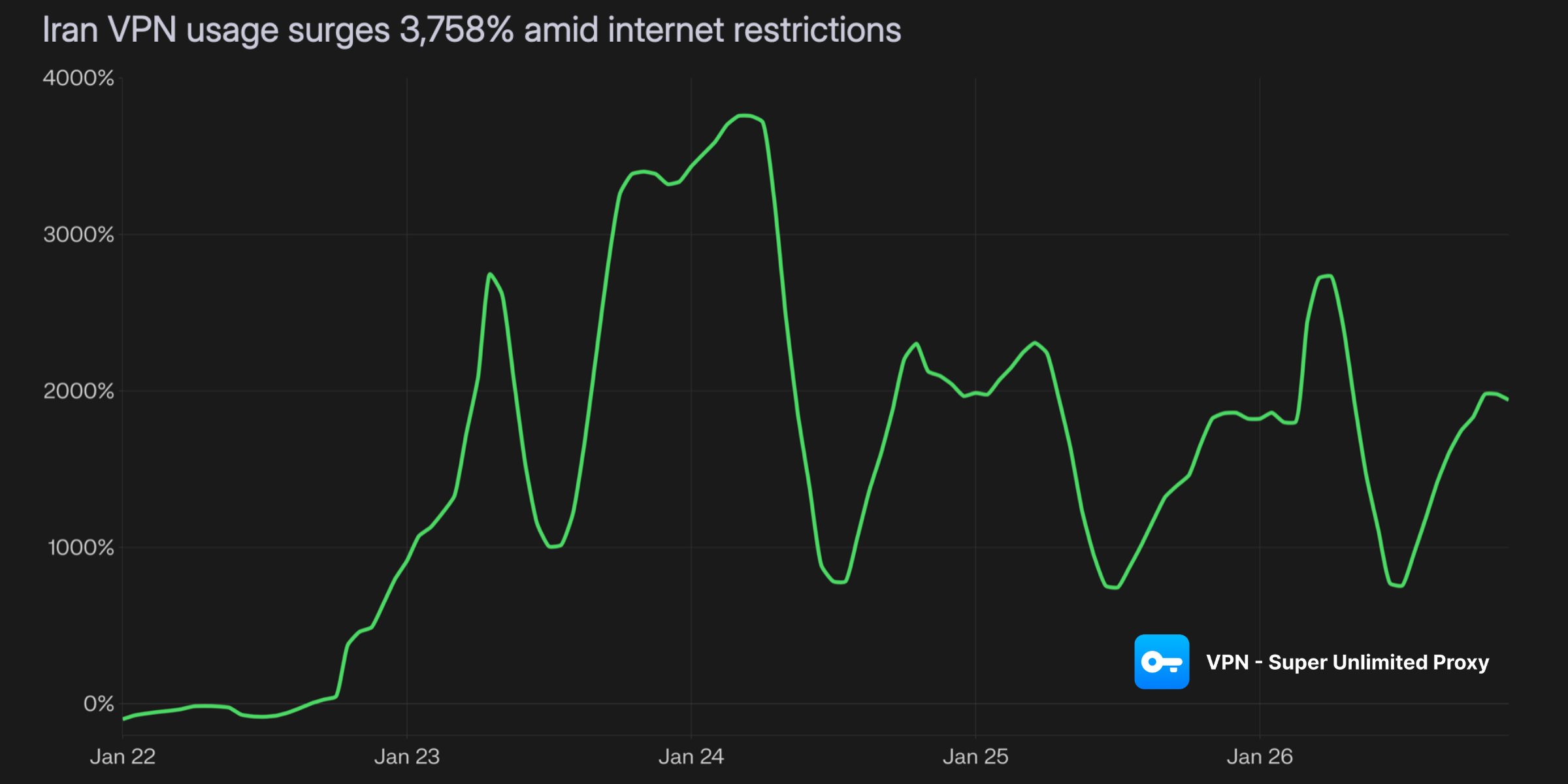
Following a partial internet restoration on January 22, 2026, VPN demand in Iran spiked 3,758% as users faced continued blocks on international platforms. This surge highlights the critical role of VPNs in bypassing the state's "National Information Network" filter.
Censorship
Digital Rights
Privacy
VPN Super
January 26, 2026
Share:
Table of Contents
Iran experienced a massive surge in VPN traffic this week following the partial restoration of internet connectivity after a near-total blackout that began on January 8, 2026.As access returned to specific provinces on January 22, citizens found themselves trapped behind a "digital wall". Basic connectivity was back, but international platforms remained strictly blocked, forcing a mass migration to VPNs.
Date implemented:
January 8, 2026 (Total Blackout); January 22, 2026 (Partial Restoration)
Platforms affected:
WhatsApp, Instagram, Telegram, and all major international websites blocked; access limited to domestic "National Information Network"
Censorship method:
Near-total network shutdown followed by aggressive throttling and IP filtering of international traffic
Reason cited:
Regime cited "security conditions" and "terrorist operations" during nationwide protests
Areas affected:
Nationwide blackout; partial restoration began in Esfahan, Fars, and other provinces
VPN surge:
+3,758% peak increase; 118,261 active connections recorded at peak
How the disruption was measured
App telemetry
Our anonymized data recorded a 3,758% increase in VPN traffic from Iran compared to the pre-blackout baseline.
The Spike: Traffic remained near zero during the total blackout (Jan 8–22).
The Surge: On January 22 between 13:30 and 14:30, connections jumped +376% in just one hour.
The Peak: Usage continued to climb rapidly, reaching an all-time high of on January 23 at 22:30.
Independent context
This data aligns perfectly with external reports. On January 22, Iranian news agencies and monitoring groups confirmed that internet connectivity was being restored in phases, starting with provinces like Esfahan and Fars. However, this "restoration" came with a catch: while the physical connection was back, the "National Information Network" (intranet) was keeping users cut off from the global web, driving the immediate demand for circumvention tools.
What happened and why?
Jan 8, 2026: Amid escalating nationwide protests, authorities imposed a near-total internet blackout, cutting off mobile and fixed-line networks to suppress dissent and block information flow.
Jan 22–23, 2026: Connectivity began to return in select regions. Technical assessments indicated a phased rollout in provinces like Esfahan and Fars.
The "Filter Trap": Despite the restoration, the regime maintained strict blocks on international platforms. Government spokesperson Fatemeh Mohajerani stated that full access to international websites would remain blocked until at least the Iranian New Year (March 2026).
This created a scenario where VPNs are no longer a luxury but a necessity for basic communication.
Got Blocked? Help Track It
If you are in Iran and facing ongoing restrictions:
Submit anonymous evidence: Share screenshots of error messages or blocked pages.
Run a test: Use OONI Probe to measure which websites and apps are specifically blocked on your network.
Together, censorship can be mapped and fought.
Censorship
Digital Rights
Privacy
Share:
VPN Super
VPN Super is dedicated to your online security and privacy. Posts from this account will focus on company news or significant privacy and security stories.